
 Dennis Wingo, from the Lunar Orbiter Image Recovery Project (LOIRP), recently conducted a seminar on the LOIRP and our progress to date for students attending the current session of the Singularity University at NASA Ames Research Center. Next week Dennis will conduct a similar session for students attending the International Space University, also in residence this summer at NASA Ames.
This is all in keeping with our continued interest in having students participate in our project. To date, students have made a significant contribution to the success of the LOIRP.
LOIRP Featured by National Geographic
 MOON PICTURES: 1960s Orbiter Images Restored, National Geographic
All these steps took their toll on the quality of the images: Much like making a photocopy of a photocopy, the images of the moon created 40 years ago were fairly fuzzy and lacking in detail. But some NASA scientists had the foresight to make magnetic tape recordings of the radio-wave transmissions mid-way through the process. Now, after recovering the decades-old recordings and refurbishing outdated tape drives, a team of volunteers has begun digitizing the most famous images from the 1960s Lunar Orbiter missions with much-improved clarity and detail.
APOLLO 11: New Before-and-After Photos of Moon Bases, National Geographic
“Despite extensive restoration efforts, this photo is fuzzier and grainier than many of the restored 1960s orbiter images because of repeated viewings of the magnetic tape on which the photo was recorded.”
LOIRP Mentioned at Apollo 11 Anniversary Celebration
On Monday evening a lavish reception was held at the National Air and Space Museum in Washington, DC on the occasion of the 40th anniversary of the Apollo 11 mission. The emcee for the event was Neil deGrasse Tyson. At one point, Tyson talked about the recent LRO images taken of the Apollo landing sites – and the hardware left behind. Our Apollo 11 landing site image was used to set the context for the LRO picture. Mention was also made of the LOIRP – Lunar Orbiter Image Recovery Project. Here is a video shot with a small camera of Tyson’s comments regarding our image.
Apollo 11: Before and After
 Moon Orbiter to Photograph Apollo 11 Landing Site, Space.com
“Taking the something old, something new approach is the Lunar Orbiter Image Recovery Project, located at the Ames Research Center in the heart of California’s Silicon Valley. This team effort is led by Dennis Wingo of SkyCorp, Inc. in Huntsville, Alabama and Keith Cowing of SpaceRef Interactive, Inc. of Reston, Virginia.
The recovery project involves culling through some 1,700 images taken by NASA Lunar Orbiter missions from the 1960’s, convert that data into digital form and then reconstruct the images to yield 21st century pictures far superior than the originals.
Ideally, upgrading an old Lunar Orbiter image taken of the Apollo 11 landing zone before Armstrong and Aldrin set foot there, contrasted to a new LRO overhead shot, would present a unique before/after look-see of the historic Tranquility Base site, said Greg Schmidt, deputy director of the NASA Ames-based Lunar Science Institute.
The Apollo sites themselves are extremely well characterized thanks to human explorers dispatched to those individual locales, Schmidt noted. LRO images of these areas will let us see the landers — and likely other artifacts such as the lunar buggies used in the Apollo 15, 16, and 17 missions – all of which will no doubt be very powerful in ways beyond mere science, he said.”
LOIRP Article in Computer World: How We Got The Images
 The lost NASA tapes: Restoring lunar images after 40 years in the vault, Computerworld
“Liquid nitrogen, vegetable steamers, Macintosh workstations and old, refrigerator-size tape drives. These are just some of the tools a new breed of Space Age archeologists is using to sift through the digital debris from the early days of NASA, mining the information in ways unimaginable when it was first gathered four decades ago. At stake is data that could show Earth’s risk of an asteroid strike, shed light on global warming and — perhaps — even satisfy those who think the moon landings were a hoax. The most visible of the archeologists is arguably Dennis Wingo, head of Skycorp Inc., a small aerospace engineering firm in Huntsville, Ala. He’s the driving force behind the Lunar Orbiter Image Recovery Project, operating out of a decommissioned McDonald’s (since dubbed McMoon’s) at NASA’s Ames Research Center in Mountain View, Calif. The project’s goal is to recover and enhance as many of the original lunar landing images as possible.”
The Story of Project McMoon’s – As Reported in Italy
La luna nel forno – La storia del progetto McMoon, Wittgenstein
“Nello spazio nessuno puo sentirti urlare”. Non c’e atmosfera, e il suono non si propaga. Nemmeno sulla luna. Lo schianto contro la superficie lunare di quei cinque accrocchi grandi come un chiosco dei gelati avvenne nel silenzio. Di loro non restarono che i racconti. Questa storia era cominciata prima. Il primo Lunar Orbiter fu lanciato nello spazio il 10 agosto 1966. A bordo non c’era nessuno. La sua missione era di fotografare la superficie lunare in preparazione dello sbarco dell’Apollo 11, che sarebbe avvenuto tre anni dopo. Allo stesso scopo, altri quattro apparecchi simili furono inviati intorno alla luna nei mesi successivi.”
Moon Missions – 40 Years Apart – But Still Like Minded
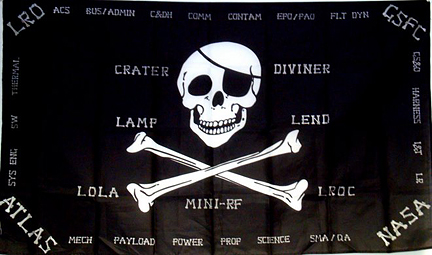
This pirate flag image sits at the bottom of the LRO Mission Team’s Blog. At the Lunar Orbiter Image Recovery Project (LOIRP) located in an abandoned McDonalds outside the gate at ARC, we adopted a similar motif … we fly a similar flag in our front window and opened our recent presentation at the Apple World Wide Developers Conference with one as well. We even have t-shirts for sale!

LOIRP In The News
Moon’s South Pole Gets Close-Up in Restored Photos, space.com
“Newly restored photographs of the moon’s dark south pole, taken by lunar orbiters in 1967, were released this week in anticipation of NASA’s planned Thursday launch of two new probes that will investigate the region in search of underground ice.”
More Photos From the Lunar Time Machine, Universe Today
“The LOIRP team is working on digitizing the data, and restoring the images to their full resolution. These images are especially timely, given the upcoming launch of the Lunar Reconnaissance Orbiter, hopefully this week. NASA can compare detailed high-resolution images from 1966 to the present and see what changes occurred in 40-plus years. “What this gives you is literally before and after photos,” Cowing said.”
Lunar Orbiter III-154-H2, Lunar Networks
“In fact, there is a lot of Cold War, personal and science history in this otherwise ordinary-looking shot of apparently unremarkable lunar landscape. The folks at Moonviews have now added their own and very welcome contribution.”
LOIRP recovers Lunar Orbiter IV lunar south pole image from 1967, Lunar Networks
“For the third time in one week Moonviews, the Lunar Orbiter Image Restoration Project (LOIRP) has released another spectacular total restoration taken from multiple passes over magnetic tape retaining data downloaded directly during the U.S. Lunar Orbiter series (1966-1968).”
Lunar Orbiter Image Recovery Project (LOIRP) Releases New Image of Apollo 12/Surveyor III Landing Site
This image LO3-154-H was taken by Lunar Orbiter III on 20 February 1967 and shows the landing site for both Surveyor III (landed 20 April 1967) and Apollo 12 (landed 19 November 1969).
Figure 1 shows the region without labels. Figure 2 shows major features plus EVA routes.

Figure 1: Apollo 12/Surveyor III landing site as seen by Lunar Orbiter III (larger image)


Figure: 2 Apollo 12/Surveyor III landing site as seen by Lunar Orbiter III with prominent features and EVA routes (larger image)

This image has been recovered in its original high resolution format from original Lunar Orbiter project data tapes using restored tape drive hardware and will eventually be submitted to the PDS (Planetary Data System).
LOIRP Note: We will be putting the full resolution version of this image on the NASA Lunar Science Institute website with the layers preserved for Photoshop for all you folks to have fun with! We only ask that you send us copies of what you do and credit us if you publish it anywhere.
For more information on the Lunar Orbiter Image Recovery Project (LOIRP) visit https://moonviews.wpenginepowered.com
For information on NASA’s Lunar Science Institute visit http://lunarscience.arc.nasa.gov/
Lunar Orbiter Image Recovery Project (LOIRP) Releases New Image of the Moon’s South Pole
This image was taken by Lunar Orbiter IV in May 1967 and shows the south pole of the Moon. Figure 1 shows the region without labels. Figure 2 shows major features plus notation regarding processing artifacts from the spacecraft’s film processing system. The moon’s south pole is located near the rim of Shackleton Crater.
Adjacent to the south pole is Shoemaker crater named in honor of famed planetary geologist Eugene Shoemaker. The Lunar Prospector spacecraft, carrying some of Shoemaker’s ashes, was deliberately crashed in this crater in an attempt to see if any water ice would be thrown up by the impact.
The Lunar CRater Observation and Sensing Satellite (LCROSS) will be targeted to impact at the south pole of the moon. As such, the moon’s polar regions are of great interest right now.

Figure 1 South Pole of the moon as seen by Lunar Orbiter IV (larger image)

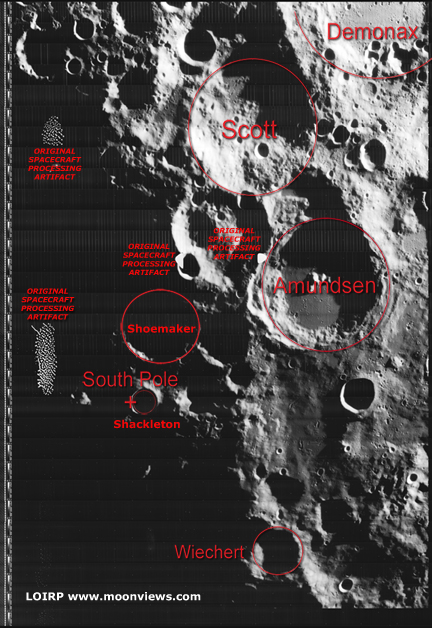
Figure 2 South Pole of the moon as seen by Lunar Orbiter IV with prominent features and processing artifacts identified (larger image)

This image has been recovered in its original high resolution format from original Lunar Orbiter project data tapes using restored tape drive hardware and will eventually be submitted to the PDS (Planetary Data System).
LOIRP Note: We will be putting the full resolution version of this image on the NASA Lunar Science Institute website with the layers preserved for Photoshop for all you folks to have fun with! We only ask that you send us copies of what you do and credit us if you publish it anywhere.
For more information on the Lunar Orbiter Image Recovery Project (LOIRP) visit https://moonviews.wpenginepowered.com
For information on NASA’s Lunar Science Institute visit http://lunarscience.arc.nasa.gov/
Presentation by Dennis Wingo on the Lunar Orbiter Image Recovery Project at the 2009 Apple WWDC
Lunar Orbiter Image Recovery Project (LOIRP) Releases New High Resolution Image of The Apollo 14 Landing Site With EVA Details
This photo (Frame 133-H2) of the future Apollo 14 landing site was taken by Lunar Orbiter III on 20 February 1967 at an orbital altitude of 46.7 km. The resolution of the image is around 0.8 meters per pixel. The area covered by this image is 4.52167 x 5.77666 km.
Figure 1 shows the image unlabeled. In Figure 2 we have overlaid the EVA route upon this image so as to show where the crew set foot. While the crew were supposed to visit Cone crater they stopped 20 meters short of doing so due to some confusion as to their exact location. That said, they did visit some large rocks located adjacent to Cone crater’s rim. The enlargement of this Lunar Orbiter image clearly shows some large rocks poised near the crater’s rim. The inset photo shows the largest outcropping as photographed by the crew on the surface.
NOTE: We originally posted these files in an incorrect orientation. This was due to how the images originally show up when they are retrieved from the original tapes. Thanks to all of you eagle-eyed viewers we caught that. We have replaced those earlier files with ones that are correctly oriented to North, South, East, and West.
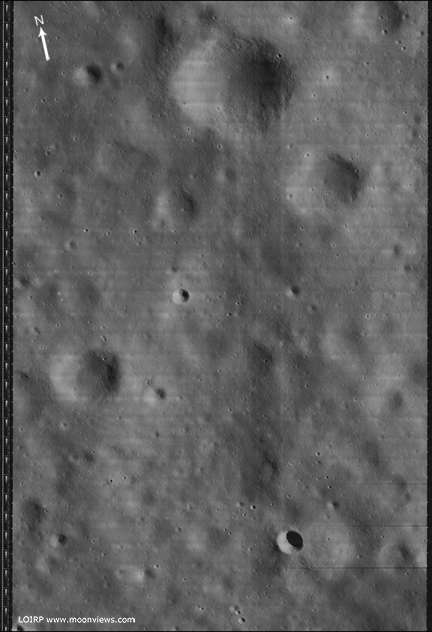
Figure 1 Lunar Orbiter III Frame 133-H2 unlabeled [larger view]
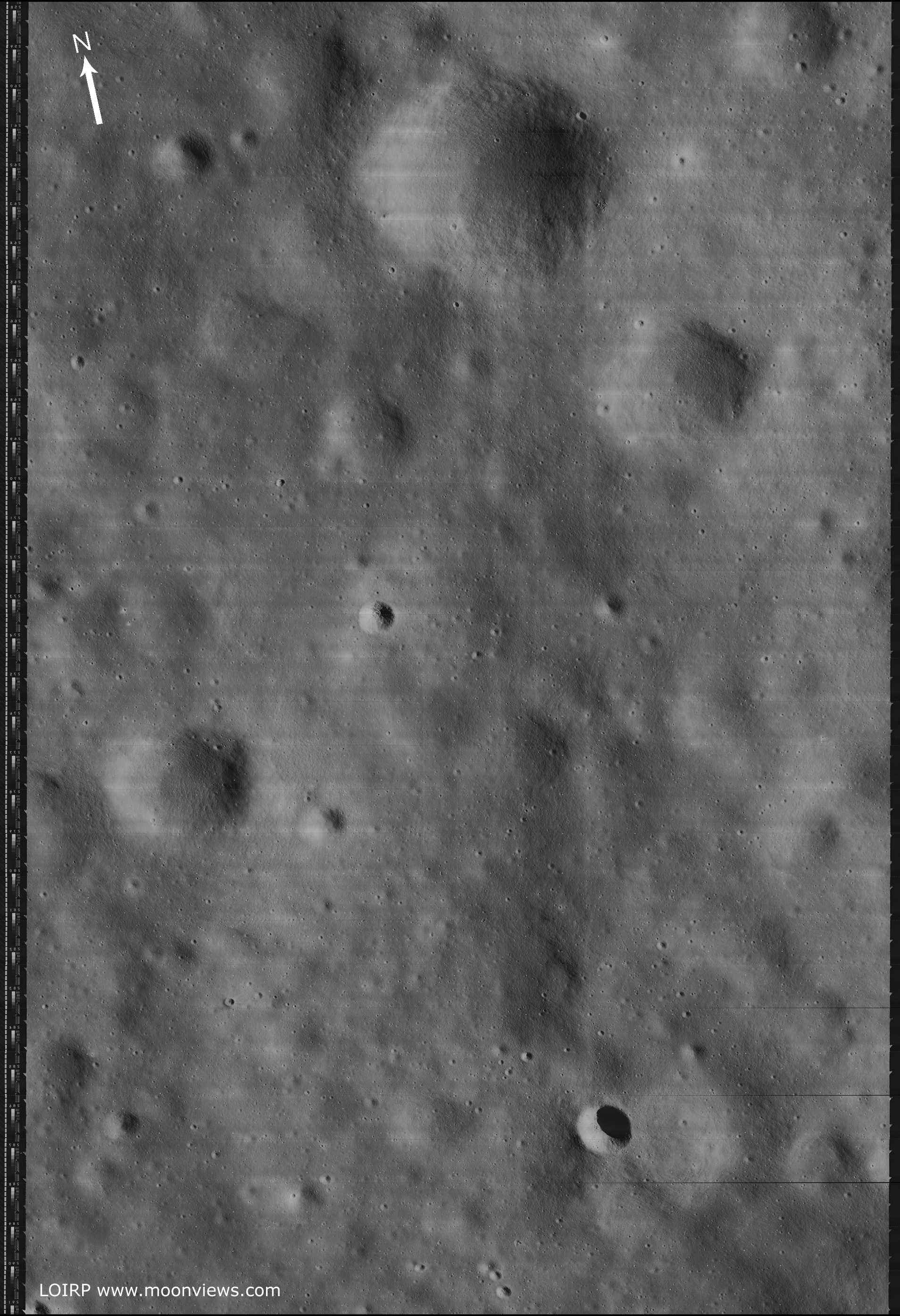
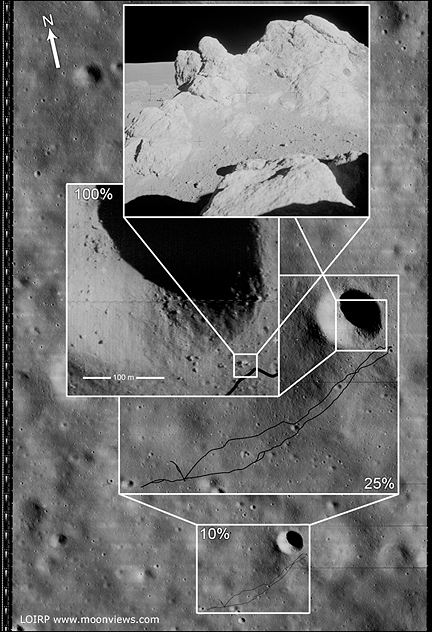
Figure 2 Lunar Orbiter III Frame 133-H2 labeled to show EVA route. [larger view]

This image has been recovered in its original high resolution format from original Lunar Orbiter project data tapes using restored tape drive hardware and will eventually be submitted to the PDS (Planetary Data System). The full resolution is online here at NLSI.
LOIRP Note: We will be putting the full resolution version of this image on the NASA Lunar Science Institute website with the layers preserved for Photoshop for all you folks to have fun with! We only ask that you send us copies of what you do and credit us if you publish it anywhere.
For more information on the Lunar Orbiter Image Recovery Project (LOIRP) visit https://moonviews.wpenginepowered.com
For information on NASA’s Lunar Science Institute visit http://lunarscience.arc.nasa.gov/
Related Links
Apollo 14 Surface Operations Overview
Apollo 14 Preliminary Science Report
Apollo 14 Mission Report
Apollo 14 Lunar Surface Journal